
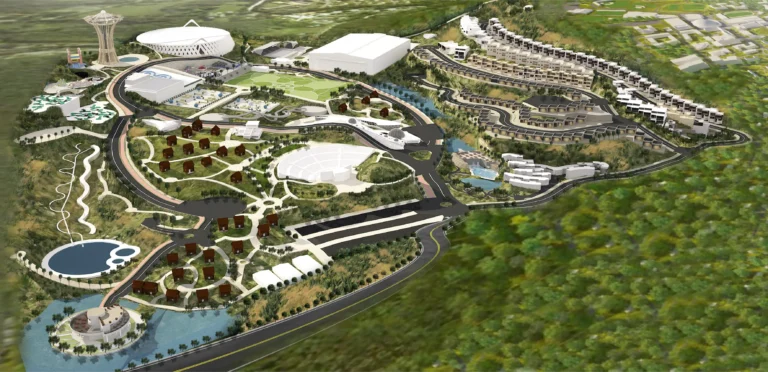
Everything about Omid Kevin and Omid Youth Holding
Click on the heading title to review each section.
🔹General introduction to the Omidcoin (OMC) project
🔹Introducing the Youth Hope Sports Development Company
🔹 The connection between physical projects and blockchain technology and the omid Coin token
🔹 Introducing the team and management structure of the company and the omid Coin project
🔹Message from the CEO of Omid Youth Sports Development Holding
General introduction to the Omidcoin (OMC) project
Omid Coin (OMC) is a digital token based on the ERC-20 standard and developed on the Polygon network platform, designed to create a transparent, sustainable, and participatory platform for Iran’s economic and social growth.
This token is not only a new financial instrument, but also part of a larger ecosystem called the Sustainable Cities of Iran Village Complex — a national, long-term project that focuses on developing rural areas, strengthening economic infrastructure, and creating equal opportunities in the fields of tourism, health, sports, agriculture, and technology.
Omidcoin, by utilizing blockchain technology and a hybrid offering model (Pre-Sale + Mining), has provided a new path to attract small and large capital in a legal, transparent and popular manner. The project is designed so that investors, developers and ordinary users can participate in both the economic profit and social progress of the project by directly participating in its growth process.
As the beating heart of the Omid ecosystem, OMC is a bridge between digital capital and real projects in the context of Iran’s sustainable development; a bridge that aims to build a brighter future for today’s and tomorrow’s generations by relying on trust, technology, and real value creation.
Project Mission & Vision
The Omidcoin project began with a clear and forward-looking mission: to transform digital investment into a tool for real, sustainable, and humane growth.
In a world where the digital economy is becoming more widespread, OMC’s mission is to create a balance between modern technology and grassroots development. The Omidcoin development team believes that blockchain technology can provide a fair platform for the distribution of opportunities, wealth, and progress — a platform where all people, regardless of geographical location, have the opportunity to participate in the country’s economic growth.
The project’s vision is to become one of the five leading Asian tokens in the field of sustainable development by 2030. Omid Coin, relying on the strong support of the “Omid Jawawan” company and using innovative models in mining and pre-sale, aims to make Iran one of the pioneers of smart and social investment in the region.
In pursuit of this vision, the Omidcoin team adheres to principles such as transparency, economic justice, technological innovation, social trust, and long-term sustainability.
Every transaction on the Omidcoin network has not only financial value but also social meaning — as each unit of OMC symbolizes hope, progress, and a brighter future for Iranian society.
Introducing the Youth Hope Sports Development Company
Part One: Omid Jawan Sports Development Company was established in 2014 with the aim of creating a sustainable transformation in the fields of sports infrastructure, tourism, and urban development. The company’s initial mission was to design and build Iran’s first Olympic Village with a modern approach based on the principles of sustainable development; a national and forward-looking project that from the very beginning, its vision went beyond building a mere sports complex.
The goal of this project was to create a sustainable, modern, and unique complex that, while adhering to technical principles and technology localization, could become a hub for attracting domestic and foreign tourists and bring significant economic, cultural, and social achievements not only for the city of Shiraz, but also for the entire Fars province and the south of the country.
After conducting a series of specialized studies, including water and soil studies, economic feasibility studies, feasibility studies, and preliminary technical designs, this project reached the preliminary design stage of the Iranian Olympic Village in 2017, on a land area of more than 400,000 square meters in a strategic location near Shiraz.
The path of structural development and evolution
With the beginning of the second phase of activities, Omid Jawan Company, with a deeper understanding of the technical and infrastructural requirements of implementing such a project, realized that after financing, the main factor for success would be creating complete coordination and coherence between all components and sections of the project during the design, implementation, operation, and development stages.
For this reason, the company decided to develop its structure in a centralized and integrated manner so that all services required for large projects, from design to operation, are carried out under the supervision of a single and coordinated management.
From 2017 to 2021, the company, through intelligent and planned growth, was able to form a broad and powerful organizational structure in addition to expanding its capital. Along the way, it brought together all design, financial, technical, legal, branding, economic, sports, and tourism requirements into an integrated package by investing purposefully in more than 24 related companies in the form of 9 specialized subsidiaries and 15 intermediate companies.
This structure allowed Omid Jawaban Company to acquire the ability to design, manage, and implement micro and macro projects in accordance with international standards, as the first comprehensive sustainable project development complex in Iran.
Major achievements and goals achieved
By 2021, the Youth Hope Sports Development Company succeeded in simultaneously achieving six key and fundamental goals:
First: Targeted expansion of the organizational structure to more than 24 subsidiaries active in various technical and economic fields.
Second case: Developing the Iranian Sustainable Olympic Village plan into a national project entitled “Iran’s Sustainable Specialized Cities Complex”.
Third: Creating a coherent and centralized supply chain for all stages of design, implementation, and operation of sustainable projects.
Fourth item: Achieving new solutions for capital growth, economic development, and increasing the efficiency of large projects.
Fifth item: Increasing executive capability and investment in high-yield areas such as tourism, sports, and physical and mental health.
Sixth item: Creating a suitable platform for attracting investors and strategic partnerships in organizational growth and sustainable development projects.
Capital growth and investor returns
By focusing on balanced growth in structure and capital, Omid Jawanan Company succeeded in achieving remarkable and unprecedented growth by 2021. In less than seven years, the value of the company’s assets and capital grew by more than 23,000 percent, and its net capital increased to more than 8 million US dollars.
This stunning growth directly led to a rate of return of over 15,000% for early investors, a number that was much higher than the returns of traditional markets such as currencies, gold, cars, or real estate over the same period.
In this way, Omid Youth Sports Development Company was able to establish, for the first time in southern Iran, a sustainable and profitable model of structured investment; a model that has today become the main support for the development of large-scale projects, including the Omid Coin (OMC) project.
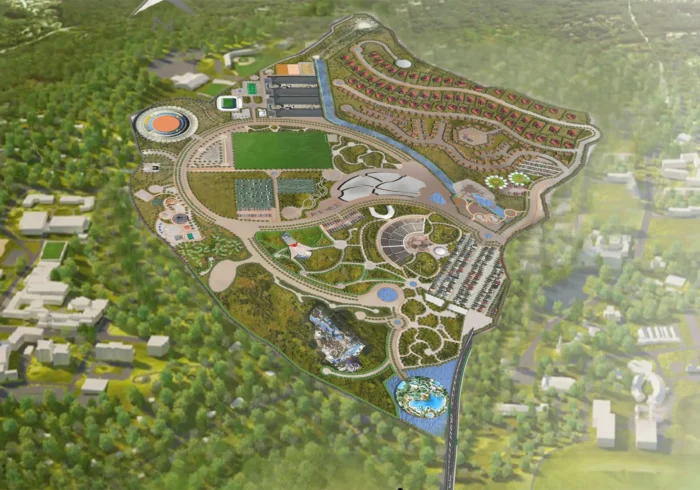
Part Two – Sustainable Village-City Master Plan “Paniz”
Continuing the development path of the Youth Hope Sports Development Company and after completing technical and organizational studies, the company’s first sustainable development executive plan was launched on a land area of more than 400,000 square meters in a pristine and strategic area about 10 kilometers northwest of Shiraz and after the historical village of Qalat. Due to its unique geographical location, temperate climate, and favorable accessibility, this area was selected as a pilot for the implementation of Iran’s first sustainable village-city model; a plan that is officially known as the “Panid” sustainable village-city.
The goal of the “PANID” project is to create a new model of sustainable living based on the coexistence of humans, nature, and technology; a model in which economic development, social welfare, and environmental protection make sense together.
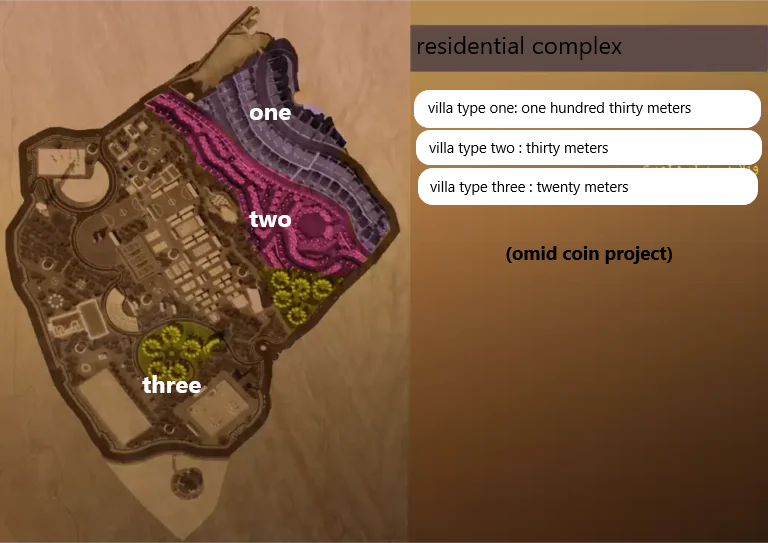
Residential complexes and villas
In the first phase of development, Omid Jawaban Company has designed and implemented residential complexes with diverse typologies to meet the different tastes and needs of investors, tourists, and families. These complexes include three main groups:
Case 1: Modern Villas (Type 1)
Designed based on contemporary architectural principles with a clever combination of glass, wood and local stones. These villas feature stunning natural views, green terraces and solar energy systems.
Second case: Normal villas (Type 2)
A simpler and more economical model of the modern type, with an efficient structure and complete family facilities; an ideal option for permanent residence or long-term tourist stay.
Case Three: Nomadic Residences (Type 3)
Inspired by the ancient nomadic culture of Fars and combining it with modern technology, this section offers a pure experience of authentic Iranian life in a modern and environmentally friendly environment.
In the remainder of this section, maps, plans, and 3D designs related to the villa and residential types of the Panid project will be available to you so that you can gain a more detailed view of the architectural structure and perspectives of the project.
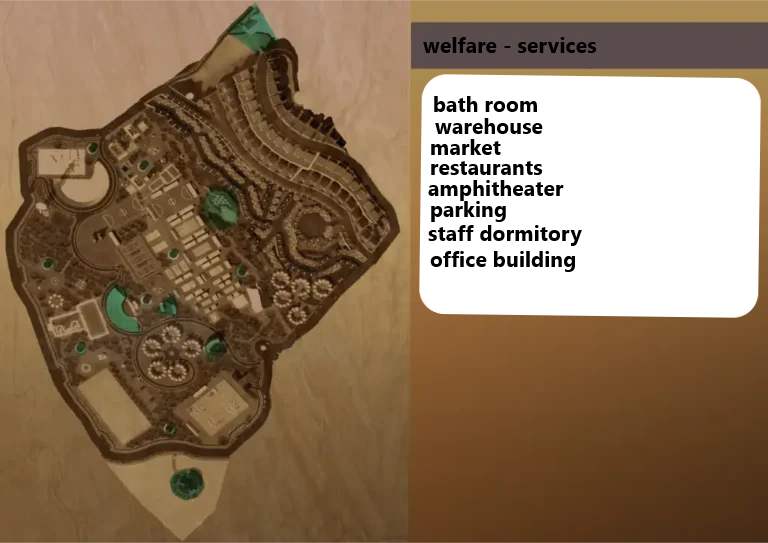
Service and support packages
In order to create a self-sufficient and dynamic city, the Panid plan includes a set of complete service and welfare infrastructure that meets the daily needs of residents and tourists.
These collections include:
Local and international restaurants and coffee shops with native-modern design
Markets selling organic products, handicrafts, and local foods
Amphitheater and multipurpose cultural spaces
Public and private parking lots
Domestic warehouses and logistics centers
Dormitories and special residences for personnel
Office and management buildings
Public health and service spaces, including restrooms and municipal service stations
In the remainder of this section, you can view maps, site plans, and architectural designs related to the service complexes of the Panid project.
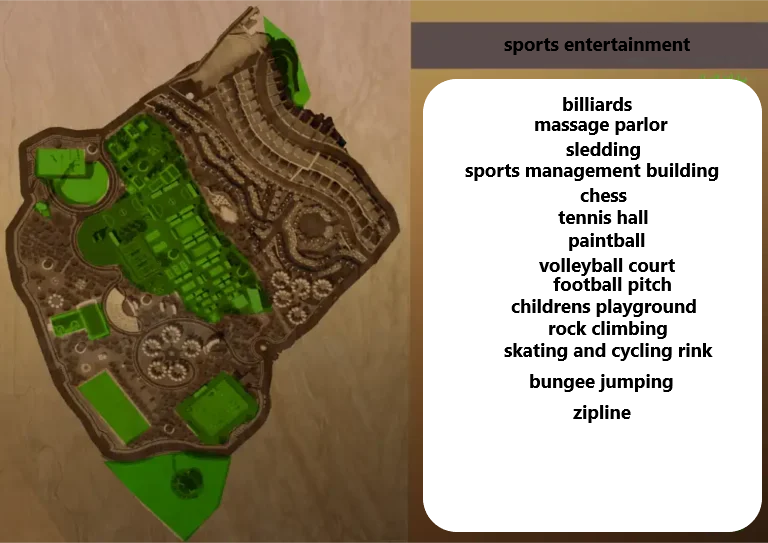
Recreational-sports complex
In line with the concept of “sustainable living with vitality and health”, an important part of the Panid project is dedicated to the creation of multi-purpose recreational and sports complexes. These complexes are designed with open and indoor spaces for the use of families, tourists and professional athletes.
The features of this section include:
Billiards and board games room (such as chess, handball, and video games)
Sledding complex and skating rink
Tennis court, paintball field, volleyball and football field
Children’s playgrounds and safe recreational spaces
Multi-purpose sports halls for local and regional events
Rock climbing complex for children and adults
Zipline and bungee jumping for thrill-seekers
Skate rink and dedicated cycling paths in the heart of nature
In the section below, maps, 3D images, and videos related to the Panid entertainment and sports complex will be visible to provide a complete overview of this sustainable town.
Part Three _ Sustainable Paniz Village Development Plan (titled Urban Lands)
A – Paniz Village-City Development Plan
Continuing the growth and success of the initial project, the Youth Hope Sports Development Company launched the Paniz Village-City Comprehensive Development Plan in order to achieve the major goals of sustainable development and based on extensive technical and ecological studies.
In this plan, the project area will increase from the initial 40 hectares to about 3,700 hectares of land; a vast area located in the central part of Shiraz city and on mostly barren lands but with high potential.
The main goal of implementing this development is to create a residential and tourism complex with unique features that includes diverse recreational, sports, residential, and cultural functions.
This plan is defined based on four key principles:
Intelligent exploitation of the region’s natural resources;
Complete coordination with the country’s macro visions in the field of sustainable development;
Adapting to resistance economy policies and creating sustainable employment generating infrastructure;
Creating platforms for the growth of capital, tourism, and social welfare in the south of the country.
The expanded Paniz project is not only a continuation of the success of the initial version, but also the first operational model of a “sustainable city megaproject” on a regional and national scale. In this plan, residential, tourism, sports and health functions are designed in an integrated and purposeful manner to form a dynamic and balanced habitat that can both meet the residential and welfare needs of the community and act as an economic driving force for the region.
This development phase is considered the beginning of a new chapter in the growth path of Omid Jawana Company and is considered the first step in the formation of a chain of sustainable specialized cities in Iran.
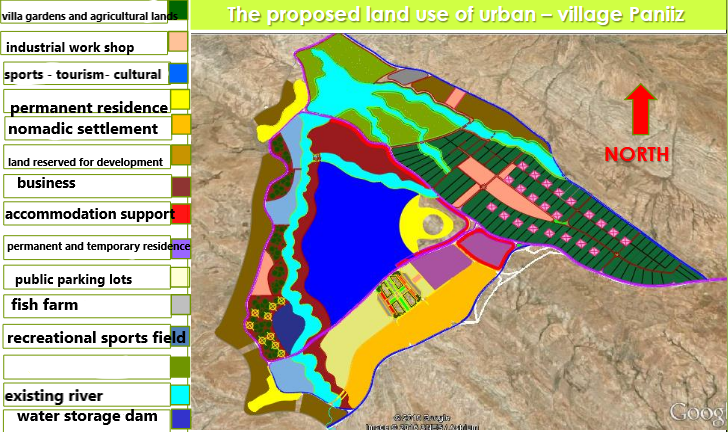
B – Northern part of the development area
The northern part of the Paniz village-city development plan includes fertile and agriculturally suitable lands located above the main communication axis of the region and its approximate area is 880 hectares.
This area, due to its favorable geographical location and high soil quality, has historically been used for agriculture and gardens. However, over time, due to the use of plant species that are not suited to the region’s climatic conditions, a significant portion of these gardens and farms have suffered stagnation and drying out.
Studies conducted by the technical team of the Youth Hope Sports Development Company show that by scientifically managing water resources, implementing new irrigation patterns, and selecting plant species compatible with the climate of the Shiraz region, a large portion of this land can be restored and returned to the production cycle.
The goal of redevelopment in this area is to revitalize abandoned agricultural lands and transform them into a new hub of smart and sustainable agriculture, where state-of-the-art technologies in the field of modern agriculture, drip irrigation, and automated moisture control and plant nutrition systems are used.
As one of the vital pillars of the Paniz plan’s development, this section plays a dual role:
On the one hand, it helps ensure food security and local income sources,
On the other hand, by creating a natural and lush landscape, it adds to the ecological balance and tourist appeal of the region.
D – Processing and Complementary Industries Sector
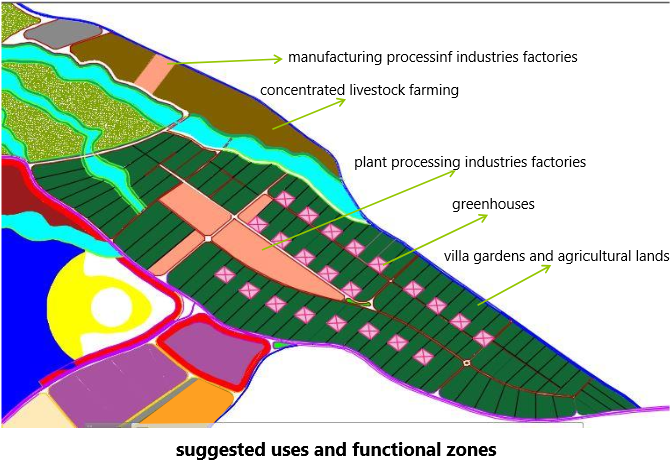
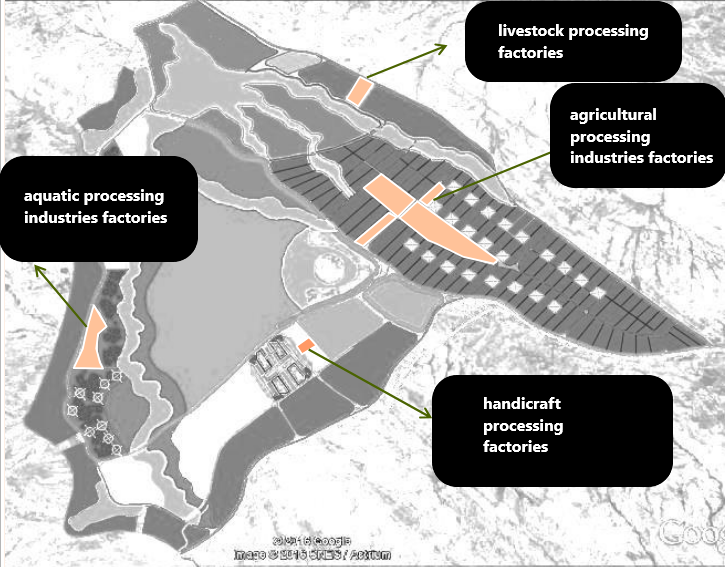
One of the key development pillars in the Paniz Rural-City Master Plan is special attention to the area of agricultural processing and complementary industries. This sector, with an area of approximately 242 hectares, is located in the central area of the plan and plays a vital role in creating a connection between the agricultural sector and industry.
Processing and complementary industries, as the connecting link between primary production and the consumer market, create added value to agricultural products, thereby improving productivity, reducing waste, and increasing the economic sustainability of the region. In fact, given the time difference between the production and consumption of agricultural products, a significant portion of these products are lost without proper processing; therefore, the development of processing industries is considered a strategic response to this fundamental challenge.
On the other hand, the targeted establishment of these industries in the vicinity of the project’s agricultural areas will lead to reduced transportation costs, prevent waste of resources, and create sustainable employment for local residents. In addition, this proximity will establish a balance between residence and employment, reduce migration from rural areas, and improve the quality of life within the framework of sustainable development.
In designing this area, with a green economy and environmental management approach, efforts have been made to minimize the environmental impacts of industrial activities. The use of clean technologies, waste management, wastewater recycling, and pollutant control are among the basic principles of the design of this section.
Among the benefits of establishing processing and complementary industries in the Paniz area are the following:
Reducing agricultural product waste and increasing resource efficiency.
Creating direct and indirect employment for residents of the region.
Developing exports of processed products and attracting foreign capital.
Reducing economic risk for producers and strengthening food security.
Completing the marketing and distribution chain at the local and national levels.
In order to achieve these goals, and based on technical criteria and regulations related to land and orchard use change, four types of factories and workshops for processing industries have been designed and located in accordance with the agricultural, livestock and food practices of the region. Each of these units has been planned in such a way that, while observing the technical and hygienic principles of production, they provide maximum efficiency from natural resources, energy and human resources and can be presented as a model of sustainable industry in the context of local agriculture.
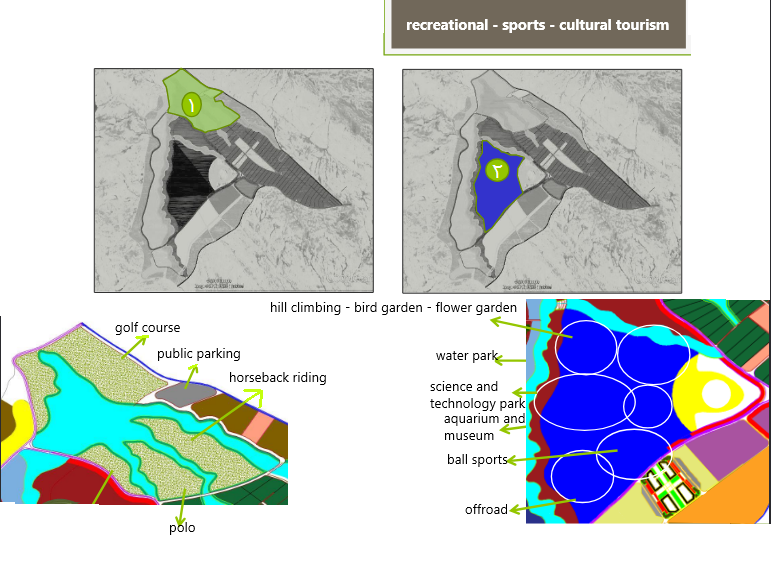
E – Recreational, sports, cultural and tourism sector (638 hectares)
In line with the grand vision of the village-city of Paniz and with the aim of improving the quality of life, attracting tourists, developing specialized sports and creating sustainable employment in the south of the country, a large part of the project’s lands has been allocated for recreational, sports, cultural and tourism uses. This complex, taking advantage of the natural features of the land, unique topography and temperate climate of the region, has been designed in two main zones, each with specific features and functional goals.
🔹 Zone No. 1 – Grass and natural sports (about 198 hectares)
This zone is located in the northwestern part of the project area and is dedicated to grass and field sports such as golf, polo, horse racing and outdoor shooting. The presence of fertile lands and natural wetlands resulting from the branches of local rivers has provided ideal conditions for the construction of extensive grass fields with minimal intervention in the ecosystem of the region.
The main goal of designing this section is to create an international sports hub with a nature-centric focus; meaning that while utilizing green spaces, special attention has been paid to protecting water resources, preventing high-density construction, and maintaining environmental balance. Given the high popularity of sports such as golf and polo worldwide and the lack of appropriate infrastructure in Iran, this zone can be considered as one of the largest sports tourism destinations in the country and pave the way for the presence of domestic and foreign tourists in the region.
📍 (In this section of the website, you can upload aerial images, maps of grassy areas, riding trails, and natural wetland landscapes.)
🔹 Zone No. 2 – Sports, Culture and Tourism (about 440 hectares)
The second zone is located in an area between the three main villages of the region and, taking advantage of the diverse topography, rolling hills, and lands prone to active activities, is dedicated to multipurpose sports, cultural, and recreational uses.
In this section, a series of exciting and energetic sports such as off-road, rally, hill climbing, shooting, paintball and indoor sports such as futsal, basketball and volleyball are planned. In addition, the establishment of an international university of tourism and physical education along with an open-air amphitheater, water park, artificial lake and theme restaurants are other prominent parts of this zone.
In the design of this area, the principles of tourism traffic management have also been carefully observed; in such a way that a significant portion of parking spaces have been planned within the site and adjacent to the uses, and public parking lots have been located on the side of the side streets to meet the needs of the complex during peak tourist periods.
This unique combination of sports, nature, culture, and recreation is not only a response to the social and economic needs of the region, but also a new model of sustainable development in the field of tourism and nature-based sports.
And – Green and open recreational spaces (352 hectares)
In order to achieve environmental goals and improve the quality of human life in the Paniz Rural-Urban Development Plan, a significant portion of the project land has been allocated to create extensive green and open recreational spaces. These spaces are designed with the aim of maintaining ecological sustainability, strengthening social interactions, and providing a healthy environment for citizens and tourists.
In the second part of the main river, a green belt of approximately 352 hectares has been planned. This green space is designed with special walking, jogging and cycling paths and equipped with gazebos, benches, standard lighting, rest stations and modern urban furniture, providing a peaceful, safe and pleasant space for spending leisure time.
In the northern part of this zone, along the back of the commercial area along the main street, there are valuable natural lands that have been allocated for public recreational use with a green development approach and the preservation of native vegetation. These areas are designed as natural parks and open gardens to establish a connection between commercial spaces and the surrounding nature.
Another prominent feature of this section is the creation of recreational green bridges at the intersection of the river; these bridges, with their eye-catching design and natural vegetation, connect the paths on both sides of the river and create a continuous network of urban greenways and nature trails.
Also, along the river’s course, a plan has been considered to restore natural springs and index their surrounding spaces in order to preserve the region’s water resources and give the environment an aesthetic and dynamic appearance. This measure is not only effective in improving the general landscape of the region, but is also considered one of the main axes of environmental sustainability of the Paniz plan.

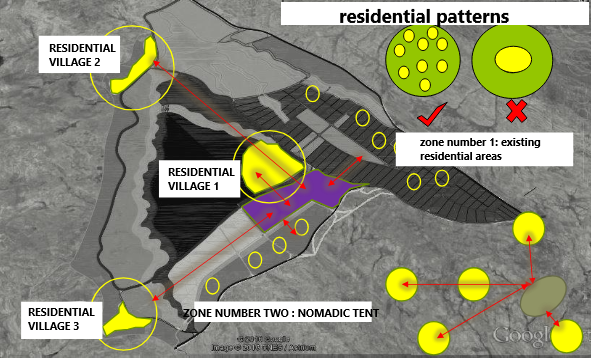
C – Zone No. 1 – Residential villages and settlements in farms and orchards (area: 376 hectares)
A key feature of the Paniz Village-City Master Plan is the diversity of settlement patterns and lifestyle experiences. This diversity allows for the coexistence of urban, rural, and nomadic practices in a coherent and sustainable ensemble.
In the northern part of the complex, the first phase of the residential development of the project has been designed as Zone No. 1, which will be built on a land area of approximately 376 hectares. In this section, family life is envisaged in the form of residential villas located among fertile fields and orchards. This design pattern is formed in such a way that a direct and organic connection is created between the “living space” and the “workplace and production space”. In this way, residents, while enjoying the peace and beauty of the environment, also participate in the process of maintaining and utilizing agricultural lands.
The deep connection between daily life and agricultural activities not only maintains the economic and environmental sustainability of the region, but also contributes to the revitalization of gardens, increasing green cover, and improving the ecological quality of the surrounding area. This type of settlement is a practical example of the concept of living in interaction with nature and sustainable production.
In this zone, three main types of residential villages with distinct architectural and functional features have been defined, which are:
Residential Village 1:
Focusing on living in the vicinity of farms and orchards, the design of this section is based on preserving the authenticity of the countryside and utilizing local materials. The houses and villas are located in a scattered texture among agricultural lands to maintain a direct connection between the residents and the production process and the natural environment.Residential Village 2:
This village, with a more modern approach, offers a combination of family accommodations and tourism in the heart of nature. The use of sustainable architectural design, the use of renewable energy, and communal spaces such as central courtyards and local markets have transformed this area into a model of dynamic social life in harmony with the environment.Residential Village 3:
This section focuses on recreating the experience of nomadic and nature-based living. The temporary and lightweight accommodations are inspired by nomadic tents and eco-friendly lightweight structures to provide tourists with a unique experience of living in harmony with nature and the simplicity of nomadic life.
Overall, this residential structure, utilizing the principles of sustainable development, provides a combination of modern and traditional living in a lush and peaceful environment. Zone No. 1 Paniz is a model of the coexistence of tradition and innovation, work and peace, and man and nature — the starting point for realizing the dream of sustainable living in the heart of southern Iran.
G- Commercial uses in the Paniz Village-City Master Plan
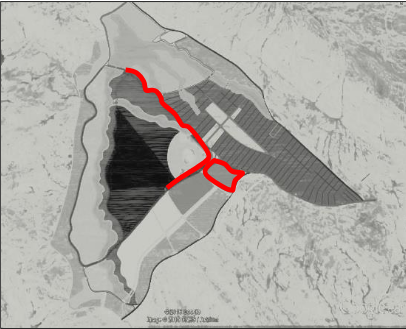
The commercial sector in the Paniz Village-City project is designed to create a balance between economic, tourism and service activities, in order to serve as one of the pillars of the region’s dynamism and economic prosperity in addition to meeting the daily needs of residents and tourists. The design and location of these spaces are based on the technical principles of sustainable development, accessibility, safety and harmony with the natural and functional context of the complex.
Key features of Paniz’s commercial applications include:
Strategic location along the main communication axis: Most of the commercial spaces are located on the edge of the complex’s main street, between villages 1 and 2. This location, in addition to increasing accessibility, has created a continuous and lively commercial strip that, while maintaining traffic order, plays an important role in shaping the urban fabric and economic identity of the project.
Easy and optimal access for the entire complex: The structure is designed in such a way that all residential, sports, cultural and recreational areas can access the commercial centers with the shortest distance and the best route. This feature, while facilitating the provision of daily services, also increases social interactions and the dynamism of public spaces.
Distribution of commercial centers in different functional layers: In addition to the main commercial axis, each of the residential, recreational and sports complexes also has internal service and commercial spaces to meet the needs of residents and tourists in the same area. This distributed structure reduces the traffic load on the main axis and at the same time, the local economy flows in all sectors.
Compliance with the principles of safety, landscape and urban sustainability: Commercial spaces located on the edge of the main street, after the road boundary and the green strip of the sidewalk, have been placed to create a natural protective layer and maintain the safety of pedestrians and vehicles. The facade, lighting and landscape design of these spaces have also been carried out with the aim of improving visual quality and attracting tourists.
Synergy with the tourism and cultural axis of the project:
Panizh shopping centers, in addition to their service function, are a platform for displaying and presenting local products, handicrafts, and local productions. This creates a link between economic and cultural activities and provides an opportunity to introduce the local identity of Fars and the south of the country.
Overall, the commercial uses in the Paniz plan not only complement other residential and recreational uses, but are also designed as the beating heart of the project’s local economy; spaces that, while maintaining harmony with the principles of sustainable development, provide the opportunity for employment growth, attracting investors, and improving the quality of life of residents.
Final conclusion
The massive Paniz village-city project, as the first implemented example of sustainable projects by Omid Jawan Sports Development Company, is a clear symbol of the combination of technical knowledge, innovation, smart management, and a forward-looking vision. This project is not only a major step towards balanced urban and economic development in southern Iran, but also the starting point of a global path to realize the dream of “sustainable life for all.”
Relying on the experience of more than a decade of specialized activity and structural growth in the dimensions of engineering, economics, sports, and tourism, Omid Jawaban Company is now on the verge of entering a new stage of development; a stage in which blockchain technology and the digital economy play a role as the smart arm of physical and civil development.
In this regard, the launch of the Omid Coin (OMC) token is not a purely digital project, but the beginning of a new chapter in the international activities of Omid Youth Holding. Omid Coin, as the exclusive financial instrument of this group, was created with the aim of facilitating the financing of development projects, expanding the infrastructure of sustainable villages and cities, and connecting global investors to real development opportunities in the context of new technology.
The future is bright;
In the coming years, as the network of “Sustainable Village-City of Hope” projects expands in different parts of Iran and then in other countries of the world, the Omidcoin token will be recognized as the exclusive cryptocurrency for urban development and sustainable living. This path, relying on the successful experience of the Paniz project and in cooperation with international teams, will create a new path to economic prosperity.
Omid Al-Janawan Holding, with faith in the power and will of man to build a better future, confidently declares that:
Today is the beginning of a tomorrow in which technology and sustainable development, together, make hope possible for future generations.
🔹 The connection between physical projects and blockchain technology and the omid Coin token
In the era of digital transformation, blockchain technology is recognized as one of the fundamental infrastructures of the future economy. Understanding this reality, Omid Youth Sports Development Company decided to integrate a significant portion of its physical assets and development capital with the digital world, thus introducing the omid coin (OMC) token as a bridge between the real world and the decentralized world of the new economy.
The purpose of launching omid coin is not only to create a digital asset, but also to create an economic, sustainable and intelligent ecosystem that can define a new model of investment, ownership and urban development on a global scale.
In this structure, each physical project of Omid Youth Company, including “Panizh Village-City”, “Residential Villages”, “Tourism Centers”, and “Agricultural and Processing Industries Projects”, plays the role of the underlying asset and the real backing of the omid coin token.
🌍 The real economy, supporting digital assets
The value of omid coin is based on the company’s physical assets, land, and projects in operation. This means that each unit of omidCoin token indirectly reflects a portion of the real value of the land and development infrastructure that the company owns.
This model combines the “real economy” and the “digital economy”, which makes omidCoin have a tangible and real backing, unlike many cryptocurrencies.
As construction projects grow and expand in Iran and then in other countries, the value of the company’s assets and, consequently, the market value of the omid Coin token will also increase.
This strategy allows investors in omid Coin to actually participate in the real and physical growth of the projects.
💡 The role of omid Coin in youth hope projects
The omid Coin token has a distinct place at the heart of all the company’s activities:
Domestic Payment Tool: Buyers and investors can use OMC to book villas, pay for tourism services, and purchase local products at Youth Hope projects.
Decentralized investment vehicle: Anyone from anywhere in the world can invest in the development of sustainable cities through blockchain.
Participation and collaboration rewards: Active users, miners, and long-term investors benefit from the growth of projects through an automated reward system.
Facilitate the financing of development projects: Instead of relying solely on traditional investors, omid Coin allows for the attraction of financial resources from international digital communities.
🔗 Linking sustainable development with the digital economy
All of Omid Youth’s projects are designed based on the principles of sustainable development; principles that pay special attention to the balance between the economy, the environment, and society.
The entry of omid Coin into this ecosystem will make these projects not only environmentally sustainable, but also economically and financially sustainable.
In this way, omid Coin is not only a cryptocurrency with real backing, but also acts as a transformative tool in the financial management of future cities.
🚀 The future path: From Iran to the world
According to the company’s medium-term goals, by 2028 omid Coin will be listed as one of the first urban development-backed cryptocurrencies on international centralized exchanges (CEXs). In the next step, Omid Youth Company plans to expand the successful “Panizh Village-City” model to other parts of Iran and then to other countries, making omid Coin the reference currency for global sustainable projects.
✨ Conclusion
In fact, omid Coin is not just a digital asset; it is a common language between technology, capital and humanity.
A cryptocurrency built not on speculation but on the ground, development, effort and future.
It is this unique combination that makes omid Coin not only valuable but also inspiring; a sign of the connection between the real world and the new digital world.
🔹 Introducing the team and management structure of the company and the omid Coin project
Behind every successful project is a team that not only believes in its expertise, but also creates a path for growth and progress with faith, experience, and a shared aspiration.
The Omid Youth Sports Development Company and the omid Coin (OMC) project are the result of a collaboration between a group of experts, entrepreneurs, engineers, and financial advisors whose common goal is to create a sustainable and humane future based on technology.
Management perspective
The management structure of Omid Jawaban Company is based on transparency, accountability, and teamwork. Each part of the complex — from the development of civil infrastructure to the design of the blockchain ecosystem — is managed under the supervision of experts in its field so that the physical and digital development of the projects move in a single direction at the same time.
Key management objectives include:
Creating a connection between investors, people and technology.
Ensuring the economic, environmental and social sustainability of projects.
Developing localized models of sustainable cities in Iran and the world.
Creating new job opportunities in the context of new technologies.
Senior management and leadership team
The management team of Omid Youth Company consists of experts in the fields of economics, civil engineering, information technology, blockchain, tourism, agriculture, and urban management. This multidisciplinary combination has led to the Omid Coin project being continuously examined and optimized from various scientific, technical, and economic perspectives.
The main management structure is as follows:
First case: Board of Directors of Omid Youth Sports Development Company
Responsible for macroeconomic and strategic decisions.
Determining project implementation policies and managing financial resources.
Overseeing coordination between the construction, agriculture, and technology sectors. Case Two: Omid Coin (OMC) Project Management
Design, development and monitoring of the token ecosystem.
Establishing connections with exchanges, investors, and international communities.
Defining reward, distribution, and token burning models to maintain economic balance.
Technology and Blockchain Development Unit
omid Coin digital infrastructure and smart contracts design.
Development of a decentralized authentication system and the project’s official wallet.
Collaborate with developers to create OMC-based applications.
Urban Development and Civil Engineering Unit
Planning and implementing physical projects such as “Panizh Village-City”.
Designing sustainable infrastructures with respect to native architecture and the environment.
Coordination between service, entertainment, and accommodation departments in projects.
International Relations and Investment Unit
Establishing relationships with companies, foreign investors, and development organizations.
Raising capital through pre-sale of tokens and development funds.
Developing the omid Coin brand in the global cryptocurrency market and green projects.
Cultural and social unit
Establishing close ties with local communities and improving the quality of life in project areas.
Holding events, festivals, and public education about technology and sustainability.
Key partnerships and advisory team
The omid Coin project has the collective support of experts and consultants from various fields:
Economic and financial advisors: to design tokenization models, predict value growth, and monitor financial transparency.
Civil and environmental engineers: To ensure the physical and environmental sustainability of projects.
Blockchain developers and cybersecurity experts: To ensure the security of the network, transactions, and smart contracts.
Digital marketing and brand internationalization consultants: to introduce omid Coin to global markets.
A management approach based on synergy
At the core of Omid Jawaban’s management philosophy is the belief that true sustainability can only be achieved through synergy between people, land, and technology. For this reason, all team members participate in joint planning and evaluation meetings from ideation to implementation, so that decisions are made based on multidimensional perspectives.
✨ Conclusion
The Omid Youth Team is not just a group of experts;
but a community of believers in a bright and humane future — a future where physical and digital development work together to create a more sustainable and free world.
Under the leadership of this team, omid Coin is on its way to becoming one of the most inspiring blockchain projects with real backing internationally.
Message from the CEO of Omid Youth Sports Development Holding
On the path of growth and transformation, there is always a point where “belief” becomes “reality.”
At Omid Jawan Sports Development Company, we have believed from the very first day that sustainable development does not only make sense by building buildings and cities, but also by creating a bright future for humans and nature.
Since 2014, relying on faith, effort, and empathy, we have embarked on a difficult but hopeful path. Our projects, from the first Iranian Olympic Village design to the Paniz village-city, have all been shaped by one goal: to create a new model of sustainable, dynamic, and humane living.
Today, with the birth of the Omid Coin token, a new step has begun on this path; a step from the physical world to the digital world, from traditional investment to a smart economy based on real value. Omid Coin is not just a digital currency; it is a bridge between the world of technology and real development on the ground, between dream and action.
We believe that the future belongs to those who dare to think beyond boundaries and create a world where humans, nature, and technology thrive together.
Therefore, in the years to come, our mission will not only be to develop development and tourism projects; it will also be to spread the concept of sustainability, create equal opportunities for young people, and inspire the generation that will rebuild the future.
To all our investors, partners, and companions around the world, I say:
This is just the beginning.
A path that begins with hope, continues with knowledge, and endures with faith in humanity and the Earth.
With respect and hope for a brighter tomorrow
Ali Yazdani
CEO and Founder
Omid Youth Sports Development Holding – omid Coin Global Initiative


