
Application of blockchain in supply chain and product tracking

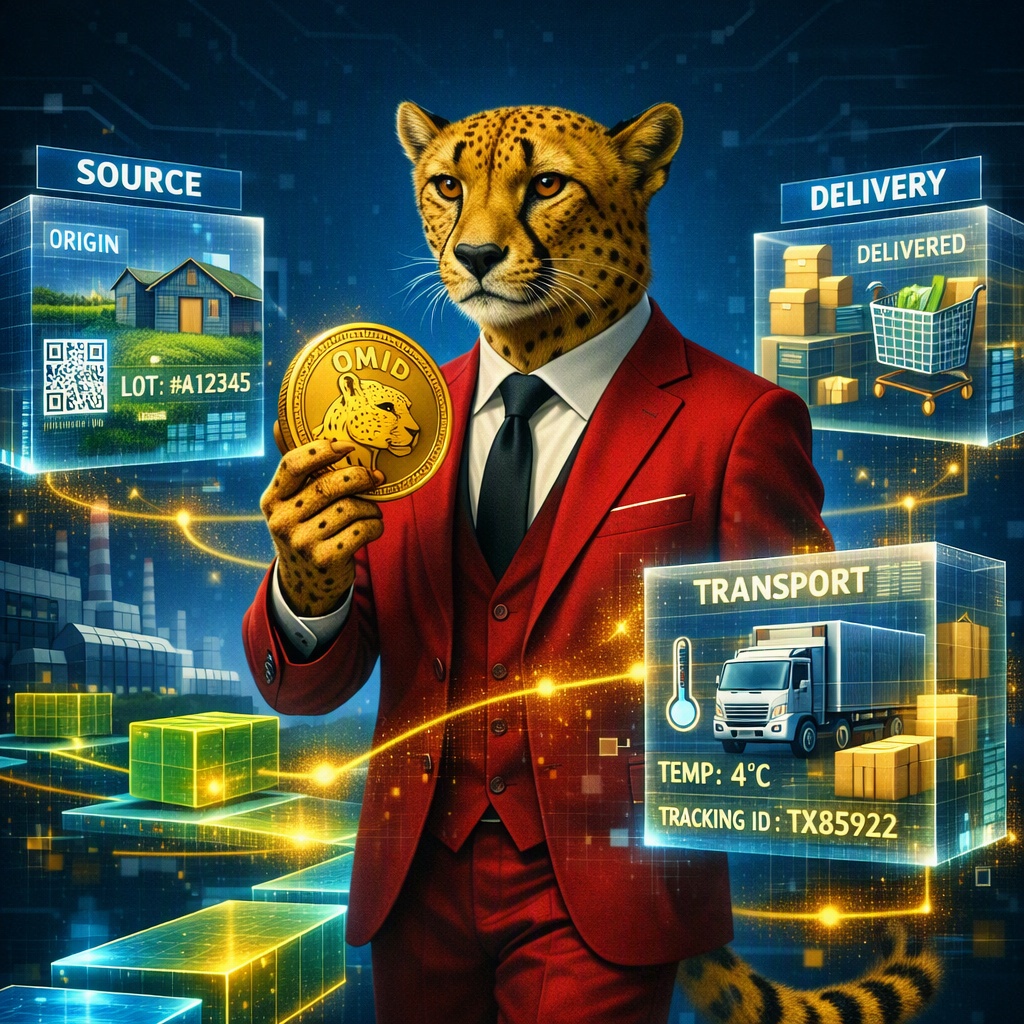
How many times have you doubted the authenticity of a product? Is this meat really organic? Is this medicine genuine or counterfeit? Where did this luxury product come from and under what conditions was it produced?
In today’s world, global supply chains have become so complex that tracing a product from its source to the consumer is nearly impossible. But blockchain technology is changing this reality.
In this article, we explore how blockchain can restore transparency, trust, and efficiency to supply chains and how networks like Polygon are making this transformation possible.
Challenges of Traditional Supply Chains
1. Lack of Transparency
| Problem | Description | Example |
|---|---|---|
| Unknown source | Consumers don’t know where the product came from | Contaminated meat with no traceable origin |
| Hidden changes | Changes in the production process are not recorded | Adding harmful substances to food products |
| No access to information | Information is not available to consumers | Working conditions of laborers in factories |
2. Fraud and Counterfeiting
-
Counterfeit products: Over $500 billion in annual losses
-
Document forgery: Fake documents for products
-
Labeling fraud: False claims about product characteristics
3. Inefficiency
-
Paper-based processes: Time-consuming and error-prone
-
Delays: Lack of coordination between different sectors
-
Slow responsiveness: Long time to identify problems
4. Lack of Trust
-
Consumers doubt producers’ claims
-
Producers doubt their suppliers
-
Additional costs for verification and guarantees
How Blockchain Transforms Supply Chains
Key Features
| Feature | Role in Supply Chain |
|---|---|
| Immutability | Permanent recording of all stages |
| Transparency | Full visibility of the chain by everyone |
| Decentralized | No need for a central authority |
| Traceability | Precise tracking of each product |
| Smart Contracts | Automation of processes and payments |
Mechanism of Operation
Step 1: Registration at the Source
-
The product is recorded at the point of origin (farm, factory)
-
Initial information (type, date, location) is stored on the blockchain
Step 2: Registration at Each Stage
-
Every time the product is moved or changed, it is recorded
-
Includes transportation, packaging, inspections, etc.
Step 3: Consumer Viewing
-
Consumers scan a QR code to view the product’s entire history
-
From source to the moment of purchase
Step 4: Verification and Trust
-
Information accuracy is verified by the network
-
No one can falsify the information
Benefits of Using Blockchain in Supply Chains
1. For Consumers
| Benefit | Description |
|---|---|
| Authenticity assurance | Verification that the product is genuine |
| Complete transparency | Full view of the product’s history |
| Quality awareness | Knowledge of production and storage conditions |
| Informed choice | Decision-making based on complete information |
| Greater trust | Confidence in the producer’s claims |
2. For Producers
| Benefit | Description |
|---|---|
| Increased trust | Strengthening brand and consumer trust |
| Reduced counterfeiting | Making product forgery more difficult |
| Improved efficiency | Automation and reduction of paper processes |
| Quick responsiveness | Fast identification of problems and recalls |
| Added value | Ability to price premium products higher |
3. For Suppliers and Distributors
| Benefit | Description |
|---|---|
| Chain transparency | Full visibility of goods flow |
| Reduced disputes | Accurate recording of deliveries and receipts |
| Improved coordination | Better coordination between sectors |
| Cost reduction | Elimination of paper and manual processes |
Practical Applications of Blockchain in Supply Chains
1. Food and Agriculture Industry
| Application | Description |
|---|---|
| Meat traceability | From farm to table |
| Organic products | Verification of authenticity and production conditions |
| Fish and seafood | Preventing illegal fishing |
| Dairy products | Tracking storage conditions |
Successful example: Walmart and IBM used blockchain to reduce mango tracking time from 7 days to 2 seconds!
2. Pharmaceutical Industry
| Application | Description |
|---|---|
| Combating counterfeit drugs | Verifying drug authenticity |
| Cold chain tracking | Monitoring temperature-sensitive medicines |
| Inventory management | Preventing shortages or overstocking |
| Quick recalls | Fast identification and collection of problematic drugs |
Importance: Over $200 billion in annual losses from counterfeit drugs worldwide.
3. Luxury Goods
| Application | Description |
|---|---|
| Authenticity verification | Proving luxury goods are genuine |
| Product provenance | Recording complete history from production to sale |
| Anti-counterfeiting | Preventing copying |
4. Fashion and Apparel Industry
| Application | Description |
|---|---|
| Ethical verification | Transparency in labor conditions |
| Sustainable products | Tracking raw materials and environmental impact |
| Anti-counterfeiting | Verifying brand authenticity |
5. Mining and Metals
| Application | Description |
|---|---|
| Diamonds and gemstones | Combating conflict diamonds |
| Rare metals | Tracking legal and ethical sources |
| Social responsibility verification | Transparency in extraction and processing |
6. Automotive Industry
| Application | Description |
|---|---|
| Vehicle history | Complete recording of repairs and accidents |
| Spare parts | Verifying part authenticity |
| Raw material tracking | Sustainable sourcing of materials |
Polygon and Supply Chains
Polygon, as an efficient and low-cost blockchain network, provides an ideal platform for implementing supply chain systems.
Advantages of Polygon for Supply Chains
| Advantage | Description |
|---|---|
| Low cost | Recording each stage with negligible fees |
| High speed | Instant recording and verification of information |
| Scalability | Ability to record millions of products |
| Compatibility | Integration with existing systems |
Examples of Polygon Applications in Supply Chains
-
Agricultural product tracking: Recording every stage from cultivation to sale
-
Luxury goods authentication: Proving product authenticity at low cost
-
Cold chain management: Monitoring temperature-sensitive products
-
Supply chain financing: Using smart contracts for automatic payments
Global Success Examples
| Project | Industry | Achievement |
|---|---|---|
| IBM Food Trust | Food | Reduced tracking time from 7 days to seconds |
| VeChain | Multi-industry | Tracking luxury and pharmaceutical products |
| Walmart – China | Food | Tracking pork from farm to store |
| De Beers | Diamonds | Tracking diamonds from mine to jeweler |
| BHP | Mining | Tracking minerals with blockchain |
Challenges of Implementing Blockchain in Supply Chains
1. Implementation Cost
| Challenge | Solution |
|---|---|
| Setup costs | Using low-cost networks like Polygon |
2. Integration with Existing Systems
| Challenge | Solution |
|---|---|
| Connecting to legacy systems | Developing APIs and integration tools |
3. Adoption by All Stakeholders
| Challenge | Solution |
|---|---|
| All suppliers and distributors must use the system | Incentives and education |
4. Standardization
| Challenge | Solution |
|---|---|
| Lack of global standards | Industry collaboration to develop standards |
5. Privacy and Confidentiality
| Challenge | Solution |
|---|---|
| Some information should not be public | Using private or permissioned blockchains |
Omid Coin and Supply Chains
Omid Coin, as a project operating on the Polygon network, promotes values that are also critical in supply chains, recognizing the importance of transparency and trust.
Connection to Omid Coin’s Values
| Value | Application in Supply Chains |
|---|---|
| Transparency | Full visibility of product history |
| Trust | Immutable verification of information |
| Efficiency | Reduced costs and time |
| Sustainability | Tracking sustainable products |
Omid Coin = Good Technology = Better Life
The Future of Blockchain in Supply Chains
Emerging Trends
| Trend | Description |
|---|---|
| IoT integration | Sensors connected to blockchain for automatic recording |
| Artificial Intelligence | Supply chain data analysis |
| Smart Contracts | Automating payments and verifications |
| Greater scalability | Full coverage of large supply chains |
| Wide adoption | Becoming standard across industries |
Predictions
-
By 2027: Over 50% of large companies will use blockchain in supply chains
-
30% reduction in fraud: Through tracking systems
-
20% increase in consumer trust: Toward transparent brands
-
Savings: Billions of dollars in cost reduction
Summary
Blockchain in supply chains is one of the most efficient and impactful applications of this technology, capable of transforming various industries.
Key Achievements:
-
Complete transparency: Viewing all stages from production to consumption
-
Reduced counterfeiting: Making forgery and fraud more difficult
-
Greater trust: Consumer confidence in product authenticity
-
High efficiency: Reduced time and costs
-
Quick responsiveness: Fast identification and resolution of problems
The Polygon network, by providing low-cost and fast infrastructure, has made it possible for businesses to implement these systems. Projects like Omid Coin, operating on Polygon, demonstrate a commitment to transparency, trust, and efficiency in the digital world.
FAQ
1. How does blockchain help with product tracking?
By recording every stage of the supply chain on an immutable ledger, it enables complete product tracking from source to consumer.
2. How much does it cost to implement blockchain in supply chains?
With networks like Polygon, the cost is very low and accessible even for small businesses.
3. Can consumers access supply chain information?
Yes, by scanning a QR code they can view the complete product history.
4. What is the difference between blockchain and traditional tracking systems?
Blockchain is immutable and transparent, while traditional systems are manipulable and lack complete transparency.
5. What role does Polygon play in supply chains?
Polygon provides a low-cost, fast platform for recording and tracking supply chain information.
6. Can blockchain prevent food fraud?
Yes, by accurately recording all stages, counterfeiting and fraud become very difficult.
7. What is Omid Coin’s connection to supply chains?
Omid Coin contributes to improving supply chain systems by promoting the values of transparency, trust, and efficiency.
8. Which industries benefit most from blockchain in supply chains?
Food, pharmaceuticals, luxury goods, automotive, and mining are among the leading industries.


