
Non-Fungible Tokens (NFTs); Art, Collectibles, and Digital Identity

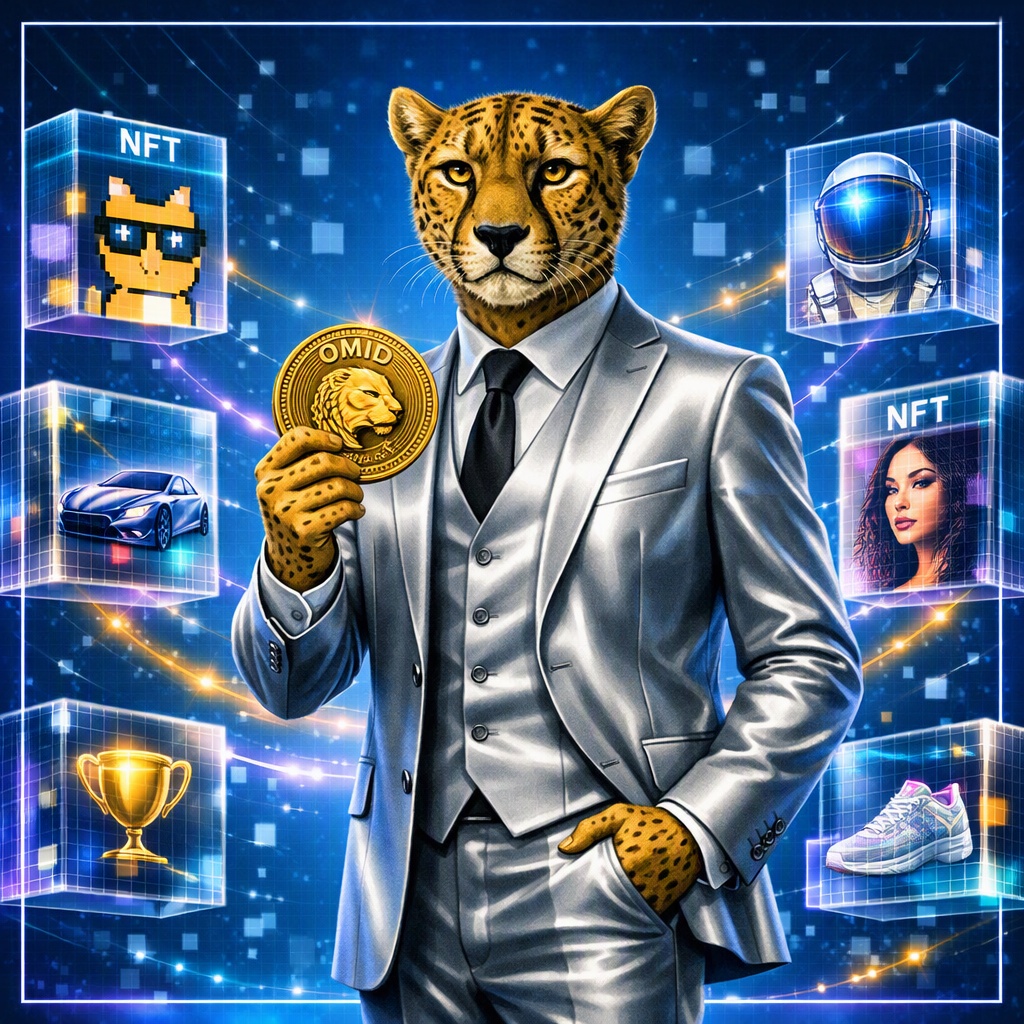
Imagine creating a digital painting and being able to sell it like a physical painting, except that the buyer can easily prove its authenticity. Or imagine buying a concert ticket and after the concert ends, that ticket remains as a valuable digital souvenir. Or imagine buying a rare item in a video game and being able to sell it as a real asset to another player.
These are just a few examples of the applications of Non-Fungible Tokens, or NFTs. NFTs are one of the most fascinating and debated innovations in the blockchain space, and they are changing our definition of digital ownership.
In this article, in simple language and with diverse examples, you will get to know the world of NFTs and understand why this technology is more than just a passing trend.
What Exactly Is an NFT?
Simple Definition
NFT stands for Non-Fungible Token. “Non-fungible” means each token is unique and cannot be exchanged for another token.
Difference Between NFTs and Cryptocurrencies
| Cryptocurrency (Fungible) | NFT (Non-Fungible) |
|---|---|
| Each unit is equal to another | Each token is unique |
| Divisible into smaller units | Typically indivisible |
| Used for transferring value | Used for proving ownership |
| Like identical banknotes | Like unique works of art |
Simple Analogy
-
Cryptocurrency (Fungible): Like 100,000 Toman banknotes—all identical and interchangeable.
-
NFT (Non-Fungible): Like an original painting by a famous artist—no one can have the exact same one.
How Does an NFT Work?
The Technology Behind NFTs
| Component | Description |
|---|---|
| Blockchain | The storage and verification infrastructure |
| Smart Contract | Rules and characteristics of the NFT |
| Metadata | Descriptive information (name, description, image, etc.) |
| Unique Identifier | A code that distinguishes the NFT from others |
The NFT Minting Process
Step 1: Choose Your Content
Select a digital work (image, music, video, text, etc.)
Step 2: Choose a Network
Select a blockchain (Polygon, Ethereum, etc.)
Step 3: Create a Smart Contract
Write code that defines the NFT’s rules
Step 4: Mint
-
Record the NFT on the blockchain
-
Assign a unique identifier
-
Store the metadata
Step 5: Transfer to Wallet
-
The NFT is transferred to the creator’s wallet
-
Ready for sale or safekeeping
NFT Standards
ERC-721
Features:
-
Each token is completely unique
-
Suitable for artworks, collectibles, and unique items
-
The first and most common NFT standard
Examples: CryptoKitties, Bored Ape Yacht Club
ERC-1155
Features:
-
Combination of fungible and non-fungible tokens
-
Allows batch processing of tokens
-
More efficient than ERC-721
Example: Video games with various items
NFT Applications Beyond Art
1. Art and Collectibles
| Application | Description |
|---|---|
| Digital art | Selling digital artworks |
| Digital collectibles | Trading cards, stamps, etc. |
| Photography | Selling authentic digital photos |
Famous example: Beeple’s artwork “Everydays: The First 5000 Days” sold for $69 million.
2. Music and Entertainment
| Application | Description |
|---|---|
| Music albums | Releasing albums as NFTs |
| Royalties | Automatic royalty collection from secondary sales |
| Concert tickets | Digital tickets with collectible value |
Example: The band Kings of Leon released their album as an NFT.
3. Video Games
| Application | Description |
|---|---|
| In-game items | Weapons, characters, skins, etc. |
| Virtual land | Purchasable land in virtual worlds |
| True ownership | Players actually own the items |
Example: Axie Infinity with millions of users.
4. Official Documents and Certificates
| Application | Description |
|---|---|
| Academic credentials | University degrees as NFTs |
| Official certificates | Verifiable certificates |
| Licenses | Professional and specialized licenses |
5. Virtual Real Estate
| Application | Description |
|---|---|
| Virtual land | Buying and selling land in the metaverse |
| Digital properties | Virtual buildings and spaces |
Example: Decentraland with virtual land parcels.
6. Digital Identity
| Application | Description |
|---|---|
| Digital ID | Unique digital identity |
| Credentials | Verifiable identity documents |
| Digital presence | Proof of attendance at events |
7. Supply Chain
| Application | Description |
|---|---|
| Authenticity verification | Proving authenticity of luxury goods |
| Product tracking | Recording complete product history |
8. Finance and Investment
| Application | Description |
|---|---|
| Fractional shares | Dividing ownership into smaller pieces |
| Investment funds | Managing capital through NFTs |
Benefits of NFTs
1. Proof of Ownership
| Benefit | Description |
|---|---|
| Immutable | Ownership is recorded on the blockchain |
| Verifiable | Anyone can verify ownership |
| No intermediaries | No central authority needed for verification |
2. Liquidity
| Benefit | Description |
|---|---|
| Sellable | Easy to sell on NFT marketplaces |
| Global access | Buy and sell from anywhere in the world |
| No restrictions | No need for galleries or intermediaries |
3. Royalties
| Benefit | Description |
|---|---|
| Automatic | Every time the NFT sells, the creator gets paid |
| Transparent | Clear and auditable calculations |
| Sustainable income | Continuous income from secondary sales |
4. Digital Scarcity
| Benefit | Description |
|---|---|
| Value creation | Scarcity creates value |
| Authenticity | Proof that the work is original |
| History | Complete history of the work is recorded |
Challenges and Criticisms of NFTs
1. High Costs on Some Networks
| Challenge | Description | Solution |
|---|---|---|
| Minting fees | High cost on Ethereum | Use Polygon with low cost |
| Transaction fees | High transfer costs | Use low-cost networks |
2. Energy Consumption
| Challenge | Description | Solution |
|---|---|---|
| High consumption | On PoW networks | Use PoS networks like Polygon |
3. Fraud and Forgery
| Challenge | Description | Solution |
|---|---|---|
| Fake NFTs | Copying others’ work | Verify and check the source |
| Scams | Selling NFTs not owned by the seller | Use reputable platforms |
4. Price Bubbles
| Challenge | Description | Solution |
|---|---|---|
| High volatility | Unrealistic prices | Invest consciously |
| Speculative market | Speculative trading | Understand real value |
5. Complexity
| Challenge | Description | Solution |
|---|---|---|
| Usability difficulty | Complexity for everyday users | Simpler interfaces |
| Value perception | Difficulty understanding NFT value | Education and awareness |
NFTs on the Polygon Network
Polygon has become one of the most popular networks for creating and trading NFTs.
Advantages of NFTs on Polygon
| Advantage | Description |
|---|---|
| Very low cost | Minting and transferring NFTs with negligible fees |
| High speed | Fast transaction confirmation |
| Compatibility | Support for ERC-721 and ERC-1155 standards |
| Ecosystem | Active NFT marketplaces like OpenSea |
NFT Marketplaces on Polygon
| Marketplace | Description |
|---|---|
| OpenSea | Largest NFT marketplace, with Polygon support |
| Rarible | Decentralized NFT marketplace |
| Mintable | NFT minting and selling platform |
Polygon’s Competitive Advantage
Using Polygon:
-
Artists can mint their NFTs at very low cost
-
Buyers can purchase NFTs with negligible fees
-
Mass NFT minting is possible for large projects
Omid Coin and NFTs
Omid Coin, as a project operating on the Polygon network, recognizes the importance of emerging technologies like NFTs for the digital future.
Shared Values
| Value | Connection to Omid Coin |
|---|---|
| Innovation | Omid Coin is committed to using new technologies |
| Accessibility | Striving to make technology accessible to everyone |
| Digital ownership | The importance of digital ownership and identity |
Omid Coin = Good Technology = Better Life
The Future of NFTs
Emerging Trends
| Trend | Description |
|---|---|
| Integration with the metaverse | NFTs as assets in virtual worlds |
| Institutional applications | Use by banks and large companies |
| Regulations | Clarifying rules |
| Greener technologies | Low-energy networks |
| Everyday use | NFTs entering normal life |
Predictions
-
By 2027: The NFT market will exceed $50 billion
-
New applications: Digital IDs, academic credentials, tickets
-
Integration with life: NFTs become part of people’s digital identity
Summary
Non-Fungible Tokens (NFTs) are one of the most important innovations of the blockchain era, changing our definition of digital ownership.
Key Achievements of NFTs:
-
Proof of ownership: Immutable proof of ownership of digital assets
-
Digital scarcity: Creating value through scarcity
-
Automated royalties: Continuous income for creators
-
Broad applications: From art to official documents
-
Global access: Buy and sell from anywhere in the world
The Polygon network, by providing low-cost and fast infrastructure, has made NFTs accessible to everyone. Projects like Omid Coin, operating on Polygon, represent a movement toward a future where digital ownership is accessible to everyone.
FAQ
1. What exactly is an NFT?
A unique digital token stored on the blockchain that proves ownership of a digital asset.
2. Is NFT only for art?
No, NFTs have applications in music, gaming, official documents, tickets, and digital identity.
3. What is the difference between NFTs on Polygon and Ethereum?
Polygon has much lower costs and higher speed.
4. Is NFT value real?
NFT value is determined by market demand, like any other collectible item.
5. How do I create an NFT?
By connecting your wallet to NFT minting platforms like OpenSea and selecting the Polygon network.
6. Are NFTs secure?
Yes, but you should use reputable platforms and avoid scams.
7. What is Omid Coin’s connection to NFTs?
Omid Coin, as a project on Polygon, is attentive to emerging technologies like NFTs for the digital future.
8. Are NFTs harmful to the environment?
On networks like Polygon that use PoS, energy consumption is very low.


